

A York Home, Rewired for Cleaner Air
One winter, the finished basement of a two-story colonial sat empty except for plastic bins and a dehumidifier running on a loop. The next winter, the same room held a sectional couch, a reading lamp, and a radon test kit that no longer alarmed anyone. Nothing about the house’s shape changed. What changed was a system of pipe and a fan, and the number on a small monitor near the stairs.
This is the story of that house told room by room: not a sales pitch, but a plain contrast between the way a home felt before mitigation and the way it felt after.
Musty Basement Air vs. Breathable Lower Level
Before, the lower level carried that heavy, closed-up smell most people blame on dampness. The air felt thick on the stairs, and anyone who spent an hour down there came up a little groggy. Radon has no odor, so the musty note was never radon itself, but the two often travel together through the same cracks and gaps in a slab.
After a sub-slab depressurization system pulled soil gas away before it could seep inside, the room simply breathed easier. The dehumidifier worked less. The air stopped feeling stale within a few weeks, because the pathways feeding both moisture and gas had been intercepted at the floor.
An Unfinished Storage Pit vs. a Usable Living Space
For years the basement had been treated as a place to put things, not a place to be. The homeowners half-sensed it wasn’t healthy to linger there, so they didn’t. A whole floor of the house was, in practice, off-limits.
Once the readings dropped and stayed down, that floor rejoined the house. It became a home office, then a spot for kids to watch movies. The square footage had always existed on paper. Mitigation is what made it livable square footage.
Guesswork Readings vs. Steady Monitor Numbers
Before, the family relied on a single short-term test from a couple of years back and a vague memory that it had been “a little high.” That is guesswork, and guesswork breeds either panic or denial.
A continuous monitor replaced the shrug. The crew that handled the install, a local provider of Radon Mitigation York PA, left the household with a device that showed a daily reading instead of a one-time snapshot. Watching the number hold steady well under the action level, day after day, did more for peace of mind than any verbal reassurance could.
A Noisy Worry vs. a Quiet Running Fan
Many homeowners picture mitigation as a loud machine humming in the corner. The worry is understandable, since the whole thing runs on a fan. In this house, the fan sat outside in the run of pipe along the exterior wall, and indoors it registered as little more than a faint, constant whisper.
The louder noise, oddly, had been the mental one: the nagging question of whether the air was safe. That quieted the day the system came on and the manometer tube showed the proper pressure difference. A small column of liquid, slightly off level, became a daily sign that the fan was doing its job.
Nervous Buyers vs. Confident Offers
When the family later considered selling, the before-and-after mattered in dollars. An elevated radon result on an inspection makes buyers nervous, slows negotiations, and often triggers a last-minute credit request.
Instead, they could hand over documentation: the install, the sealed slab, and months of monitor history. In this part of south-central Pennsylvania, where elevated readings are common enough that buyers ask about them, a mitigated and documented home drew steadier interest and fewer conditions. The system that protected their lungs also protected the transaction.
A Patched-Up Slab vs. a Sealed, Depressurized Foundation
Before, the floor had a few caulked cracks and a sump pit covered loosely with a board. Those patches looked like effort but accomplished little, because gas doesn’t need a wide opening.
The finished foundation was genuinely sealed: the sump lid gasketed, the slab-to-wall joint closed, and a suction point drawing air out from beneath the concrete so the pressure under the floor stayed lower than the air above it. That reversal is the quiet engineering trick behind the whole change.
The Short Version
If you take anything from this house’s two winters, take these:
- A sealed slab plus a working fan does what scattered caulk never will.
- A continuous monitor turns worry into a number you can watch.
- Mitigation can hand you back a whole floor of your home.
- Documentation makes a future sale calmer, not harder.

Repair It or Replace It? Making the Call on Aging Woodwork
You press a thumb against the base of a window casing and it gives a little, soft where it should be firm. The paint is intact, but underneath, something has changed. That small moment of doubt is where most woodwork decisions actually begin: not with a grand plan, but with a homeowner noticing that a piece of their house no longer behaves the way it used to and wondering whether to patch it or pull it out.
Start by asking what’s actually failing
Before you can choose a direction, you need to know what you’re looking at. Woodwork fails in distinct ways, and each points toward a different answer. Surface wear, chipped finish, loose joints, and minor dents are cosmetic or mechanical problems that rarely threaten the piece itself. Rot, insect damage, structural splitting, and wood that crumbles when probed are a different category entirely.
Take a few minutes to separate the symptom from the cause. A sticking door might be the door’s fault, or it might be the frame racking out of square. Peeling paint on a sill could be ordinary age, or it could be trapped moisture quietly destroying the wood beneath. The honest diagnosis, not the first impression, decides whether repair is even on the table.
When restoration is the smarter path
Solid wood is forgiving. If the core material is sound and the damage sits on the surface or at the joints, restoration almost always wins. Old-growth trim, in particular, is denser and more stable than much of what you can buy new, and ripping it out to replace it with a lesser board is a poor trade.
Restoration makes sense when the piece can be stripped, re-glued, filled, and refinished back to full function, and when the repair will hold for years rather than months. A banister with a wobbly newel, a cabinet with worn hinges, a window with a single rotted corner that can be spliced, these are candidates for saving. You keep the character, the proportions, and the fit that were built for your house specifically.
Signs that replacement has become unavoidable
Some damage crosses a line. When rot has spread through the body of a structural member, when insects have hollowed out more than they’ve left behind, or when repeated repairs keep failing in the same spot, you’re spending good effort on a lost cause. Woodwork that no longer holds a fastener, that flexes under load, or that has lost its original shape beyond correction needs to go.
Replacement also wins when the repair cost creeps toward the cost of new work with none of the longevity. If you’d be gluing a piece back together that’s destined to fail again next season, fresh carpentry is the cheaper choice over any honest time horizon.
How age, rarity, and sentiment change the equation
Not every decision is purely practical, and that’s fair. Hand-carved trim, a stair rail from a period the house will never see again, or millwork that matches nothing currently manufactured all tip the scale toward saving the original. Once it’s gone, no catalog brings it back.
Sentiment counts too. A built-in your grandfather made carries value that no spreadsheet captures. The point isn’t to pretend those feelings away, but to name them clearly so you know when you’re paying a premium to preserve history rather than solving a maintenance problem.
Running the numbers on each route
Compare total cost, not just the quote in front of you. Restoration often has a lower material cost but higher labor, since careful stripping and splicing takes patience. Replacement front-loads material and can move faster, but it may trigger side work, matching adjacent trim, repainting a whole run, adjusting surrounding finishes.
Weigh durability against both. A fifty-dollar repair that lasts two years is more expensive than a replacement that lasts thirty. Put the expected lifespan beside the price for each option, and the smarter spend usually becomes obvious.
Where Klein Carpentry fits into the decision
This is the stage where a second set of experienced eyes pays for itself, because the diagnosis drives everything else. A skilled carpenter can tell you whether that soft corner is a splice-and-save or a tear-out, and the team at Klein Carpentry works through exactly these judgment calls with homeowners across the Jacksonville area, pricing repair and replacement side by side so the choice is yours to make with real information rather than guesswork.
A quick checklist to settle the choice
Walk through five questions: Is the core material sound or compromised? Will the repair hold for years or just months? Is the piece rare, original, or meaningful enough to justify saving? How does the full repair cost compare to replacement over its real lifespan? And will replacement drag in extra work on everything around it?
Your next step is simple: pick one piece of woodwork that’s been nagging at you, probe it honestly for soundness, and run it through those five questions before you call anyone. That short inspection will tell you whether you’re booking a repair or a replacement.

Mapping Your Next Move After Mold Shows Up
The test results came back positive, and now there’s a black-and-white report sitting on the kitchen counter saying the bathroom wall harbors active colonies. The confirmation is almost a relief after weeks of guessing. But it also forces a set of choices nobody prepared you for: how much of the wall comes out, where everyone sleeps while the work happens, and whether you treat the problem or demolish around it. This guide is about those forks in the road, not the mold itself.
Start by asking how far the contamination has actually spread
Every decision downstream depends on this one answer, and it’s the one homeowners most often get wrong. A patch of surface growth on a painted wall is a different animal from colonies that have worked their way into the cavity, the insulation, and the framing behind it. The visible stain is frequently the smallest part of the picture.
Scope is usually measured in square footage and depth. A contained spot under about ten square feet on a non-porous surface is a modest job. Once it crosses into porous materials, travels across more than one room, or shows up inside the HVAC system, you are no longer looking at a localized fix. Get the extent pinned down before you weigh any other option, because containment, relocation, and tear-out all scale directly from it.
Should you stay in the house or find somewhere else to sleep?
You don’t have to leave for most jobs. Proper containment, with sealed plastic barriers and negative air pressure, keeps spores from drifting into living space while crews work. If the affected area is small and far from bedrooms, staying put is reasonable.
Relocation starts making sense when the work zone is large, when it sits in a central part of the home, or when someone in the household has asthma, a compromised immune system, or a strong sensitivity to airborne particles. Infants and elderly residents tip the scales toward a few nights elsewhere. Weigh the cost of a short stay somewhere against the stress of living beside heavy equipment and sealed-off rooms.
Full tear-out or targeted treatment: reading the signs that point each way
Targeted treatment works when materials are intact and the growth is shallow. Hard surfaces, structural framing that’s still sound, and finishes that can be cleaned and dried are candidates for treatment rather than removal.
Tear-out becomes the honest answer when porous materials are saturated. Drywall that crumbles, carpet padding that has absorbed moisture, and insulation with visible growth cannot be reliably cleaned; they get removed and replaced. The telling signs are softness, staining that bleeds through from behind, and a musty smell that returns after cleaning. If treatment would only mask what’s living inside the material, the cheaper-looking path turns into the one you repeat in six months.
When does a small job justify calling a crew anyway?
Even a modest patch deserves professional hands when it sits near the air handler, when the moisture source is still active, or when the family includes anyone with respiratory vulnerability. A tidy little spot that keeps coming back is a signal that something behind the wall is feeding it, and that’s rarely a DIY diagnosis.
If you’re unsure whether your situation clears that bar, a consultation with a Mold Remediation Gettysburg PA team can tell you whether the job is genuinely small or just looks that way from the outside. Having the scope confirmed by someone with meters and experience often saves a second, larger cleanup later.
Matching the fix to an older home versus newer construction
Older homes bring plaster, lath, horsehair, and decades of layered repairs, which means moisture travels in less predictable paths and tear-out exposes surprises. Newer construction tends to be tighter and better sealed, which is good until trapped humidity has nowhere to escape and feeds hidden growth behind vapor barriers. Match your expectations to the building: an older house may need more exploratory opening, a newer one may need attention to ventilation and sealed assemblies.
Choosing your path when the budget and the health risk pull in different directions
This is where most people get stuck. The cheapest option on paper is often the riskiest for anyone sensitive to spores, and the thorough option strains the budget. Be honest about who lives in the home and how their health responds to the current conditions. If health risk is high, let it set the floor for your choices and find savings elsewhere, in timing or in phasing the restoration work. If risk is low and the contamination is contained, a measured, targeted approach can be defensible.
Your single next step: get the scope professionally measured before you commit to any path, because every good decision here is downstream of knowing exactly what you’re dealing with.
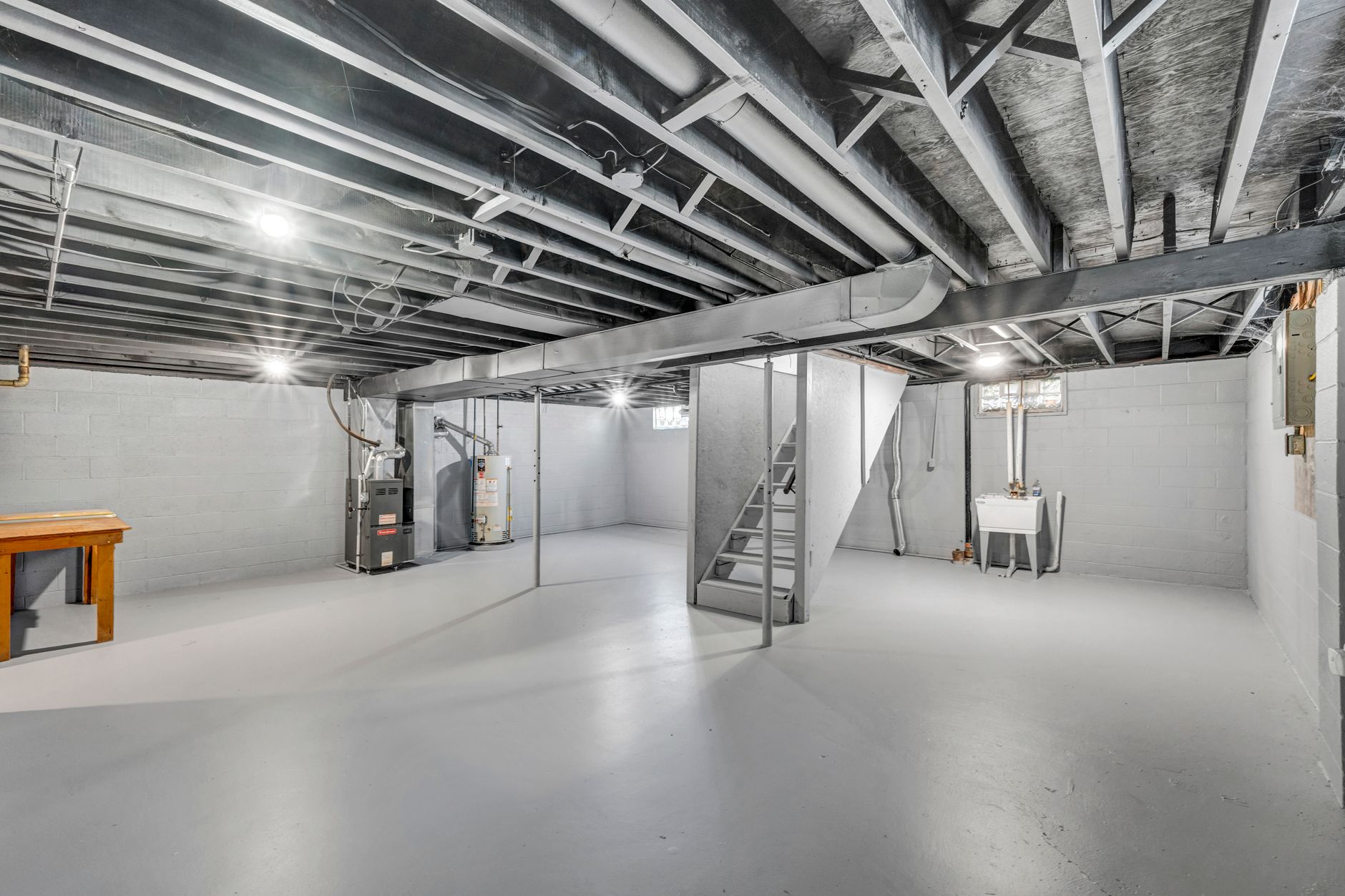
Which Radon System Fits Your Home?
Two neighbors can get high radon results from the same test kit and still need completely different fixes. One has a poured slab under a finished rec room; the other has a dirt-floor crawl space tucked behind a cinder-block wall. The radon number tells you that you have a problem. It doesn’t tell you which system will solve it. That answer comes from the bones of your house.
Start by identifying your foundation type
Before anyone talks about fans or pipe diameters, figure out what your house sits on. Walk the lowest level and look for the obvious tells: a flat concrete floor you can stand on means a slab; an unfinished area with exposed soil or a plastic sheet means a crawl space; a short, deep concrete-walled room means a full basement. Many homes mix these, with a slab over part of the footprint and a crawl space under an addition. Each foundation gives soil gas a different route indoors, so each demands a different interception point. Getting this classification right up front saves you from paying for a system aimed at the wrong part of the house.
Slab-on-grade or full basement: which suction method applies?
Both of these rely on sub-slab suction, the most common and most reliable approach. A pipe is sealed into a hole cut through the concrete, and a fan pulls the low-pressure soil gas out from beneath the slab before it can seep up through cracks and joints. The difference between a slab-on-grade ranch and a full basement is mostly about routing. In a basement you often have more room to run pipe discreetly along a wall and up through the house; with slab-on-grade, the pipe frequently exits through an exterior wall and climbs the outside of the house. Performance is comparable either way. What varies is how much drilling, sealing, and interior finishing the job touches.
Picking a path for homes with a crawl space
A crawl space can’t be depressurized the same way a slab can, because there’s no continuous concrete to pull air from beneath. The standard fix here is a sealed membrane: heavy polyethylene is laid tight across the soil floor, lapped and taped at the seams, and sealed to the walls. A suction pipe then draws from beneath that membrane, turning the crawl space into something a fan can act on. If your home is part crawl space and part basement, expect a hybrid system that treats each zone on its own terms rather than one tidy solution covering everything.
When a sump pit changes your options
An existing sump pit is often the cheapest doorway into the soil. If your basement already has one, a mitigator can seal an airtight lid over it and draw suction directly from the pit, which usually connects to drain tile looping the footing. That drain-tile network spreads the suction widely under the slab with far less drilling. The catch is that the pit still has to handle water, so the lid needs a sealed access point and the pump has to keep working. When a sump and good drain tile are present, this is frequently the fastest and least disruptive route.
Finished basements and keeping the pipe out of sight
A finished basement raises the stakes, because nobody wants a white PVC pipe running across a freshly painted family room. The decision shifts from “what works” to “what works without tearing up the finish.” An existing sump or an access point near a utility closet can let the pipe climb inside a wall cavity or through a mechanical chase. Sometimes the cleanest answer is drilling the suction point in an unfinished storage area and routing pipe up through the garage or an exterior run. These choices cost a little more in labor and planning, but they keep the living space intact.
Matching your choice to an installer’s recommendation
Use everything above to arrive at an informed opinion, then treat it as a starting point for the conversation rather than a final verdict. A diagnostic visit can reveal things a walkthrough misses, like weak sub-slab communication or a crawl space that needs more sealing than expected. A certified local provider such as Radon Mitigation York PA can run those pressure-field tests and confirm whether suction, membrane, drain-tile, or sump-based extraction will actually move your numbers down. When your reasoning and their field data line up, you can commit with confidence instead of guessing.
Your single next step: pull out your most recent radon test result and note your foundation type on the same sheet, then book a diagnostic visit so a professional can match the right system to what your home actually needs.

Where Your Stuff Waits Between Homes
You close on the old place July 15th. The keys to the new one don’t come until August 1st. That leaves roughly two weeks where your furniture, boxes, and everything you own has nowhere to legally sit. This gap between move-out and move-in dates is one of the most common wrinkles in a London Ontario move, and the choice you make about storage shapes your cost, your effort, and how many times your belongings get handled. Before you book anything, it’s worth mapping out the paths in front of you.
Mover-Held Storage vs. Self-Storage Unit
The first fork is who holds your things during the gap. With mover-held storage, the crew loads your belongings, drives them to the company’s warehouse or holds them in a locked container, and keeps them until your new place is ready. You never touch a box in between. With a self-storage unit, you rent a space yourself, the movers unload into it, and later you either move it again or hire a second crew to finish the job.
Mover-held storage tends to cost more per week, but it collapses the whole gap into one continuous service. Self-storage is cheaper by the month, though you’re now coordinating access, insurance, and a second load-out on your own. Which one wins depends on how much you value not lifting a finger twice. If you’re weighing local companies for either path, reading through firsthand experiences like this thread on two men and a truck london ontario can tell you a lot about how each outfit handles the storage-and-redelivery side, not just the straightforward point-A-to-point-B move. The difference between a mover who offers seamless storage and one who simply drops your things at a rented unit is worth knowing before you sign.
Short Gap vs. Long-Term Hold
A three-day gap and a three-month gap are not the same problem. For a short overlap, mover-held storage almost always makes sense. The crew can keep your load on the truck or in a container over a weekend and deliver Monday, and you pay for a brief hold rather than a full month of unit rent plus a second move. The convenience premium is small when the clock is short.
Stretch that gap to weeks or months, though, and the math shifts. Continuous mover storage that felt cheap for a weekend becomes a real line item over eight weeks. At that point a self-storage unit you access on your own schedule usually costs less, and you gain flexibility if your new closing date slips again, which happens more often than anyone likes. The longer the hold, the more the second handling and the ongoing rent tilt toward doing part of it yourself.
Climate-Controlled vs. Standard Space
London winters and humid summers both take a toll on things left sitting. A standard unit or warehouse bay is fine for most furniture, appliances, and sealed boxes over a short stretch. But wood furniture, electronics, artwork, musical instruments, and anything with adhesive or upholstery can warp, crack, or grow mildew when temperature and humidity swing hard, especially across a longer hold or through a season change.
Climate-controlled space costs more, and for a quick summer gap with sturdy items it may be overkill. For a piano, a leather sofa, or boxes of photos and documents sitting through a January-to-March gap, it’s cheap insurance. Match the environment to what you’re actually storing rather than defaulting to whatever’s cheapest.
One Move vs. Two Separate Loads
Every path through the gap eventually resolves into one of two shapes. Either your belongings make one continuous journey, old home to storage to new home, handled by the same crew who tracks it all, or they get split into two separate moves with your own effort bridging the middle. One move means fewer chances for damage, one point of accountability, and no scrambling to line up a second crew. Two loads cost less on paper but ask more of you and multiply the number of times each box gets lifted.
So the decision comes down to trading dollars against your own time and the risk of extra handling. A short gap with durable goods and a tight budget leans toward doing more yourself. A long or fragile hold, or simply wanting the whole thing off your plate, leans toward letting one mover carry it end to end. Look at your actual dates, your inventory, and how much of this you’re willing to touch twice, and the right path for your London move will make itself clear.

Chasing Water You Can’t See
Water that soaks into a wall cavity often leaves no visible trace for days. The drywall looks dry, the paint hasn’t bubbled, and the floor feels solid underfoot. Meanwhile the moisture that ran down a stud or pooled on the bottom plate is quietly feeding mold and softening the framing. Finding that water is the part of restoration most homeowners never see, and it drives almost every decision a technician makes on a job.
Moisture Meters Explained
The first tool out of the bag is usually a moisture meter, and there are two kinds worth knowing. A pin meter has two metal probes that press into the material and measure electrical resistance between them; wet wood conducts more readily than dry wood, so the reading rises with moisture content. It’s accurate but leaves tiny holes, which matters on a finished surface you’re hoping to keep.
A pinless meter is the non-invasive option. It uses a sensor pad that reads a shallow depth below the surface without breaking anything, letting a technician sweep across a wall in seconds and flag the damp zones. The trade-off is that it can be fooled by metal, wiring, or a change in material behind the surface, so a careful inspector cross-checks suspicious readings with a pin meter or a thermal camera. The camera doesn’t detect water directly; it shows temperature differences, and evaporating moisture leaves a cool signature that hints where to look closer.
None of these tools works in isolation. The value comes from mapping an entire affected area and establishing a baseline in a dry part of the same room, so a technician knows what “normal” reads for that specific house. Firms that handle water losses across the Metrowest area, such as MA Restoration Westborough, typically document those readings on a moisture map so the drying progress can be measured against numbers rather than guesses. That record also matters when an insurer wants proof the structure was actually dry before repairs began.
Behind The Drywall
Meters tell you where water is, but the wall cavity itself is a hidden world. Insulation acts like a sponge and holds water against framing long after the visible surface dries. In older homes around Worcester County, plaster over wood lath complicates things further, since plaster can read damp on the surface while the void behind stays saturated.
When readings show trapped moisture, technicians open the wall in a controlled way rather than tearing it apart. Small inspection holes, drilled low near the baseline, let them push a borescope inside or run a sensor into the cavity. If the water has traveled, they’ll find it at the bottom plate, where gravity collects it. From there the decision is whether the drywall and insulation can be dried in place or must be removed. Wet cellulose or fiberglass insulation almost always comes out, because it won’t dry quickly enough to stop mold, and a common approach is a clean cut a foot or two up from the floor to expose the cavity for airflow.
Drying It Out
Once the wet materials are handled, the goal is to pull moisture out of what remains before it can cause damage. Air movers create fast-moving air across surfaces to speed evaporation, while dehumidifiers capture that evaporated moisture so it doesn’t just resettle elsewhere in the room. For a sealed cavity, technicians may fit specialized nozzles that force dry air directly into the wall through the same holes they drilled to inspect it.
The process is monitored daily. Readings taken at the same points show whether the numbers are trending down toward the established dry standard. If a cavity stalls, it usually means water is still hiding somewhere the airflow can’t reach, and the technician goes back to hunting rather than declaring the job done. Humidity, temperature, and the type of building material all change how long this takes, so a reasonable estimate for one house won’t match the next.
If your home has taken on water, the most useful thing you can do before repairs start is ask for the moisture readings and the drying log, and don’t approve any wall or floor being closed up until those numbers confirm it’s genuinely dry.

Your Peptide Refuses to Dissolve. Now What?
You add your calculated volume of water, swirl the vial, and half the powder is still sitting there as a cloudy suspension or a stubborn film clinging to the glass. That refusal to go into solution isn’t just an inconvenience. If you push ahead and pipette from a partially dissolved vial, your working concentration is wrong, your dose-response curve is nonsense, and you may waste weeks chasing a result that was never real. Before you write the vial off as defective, most dissolution problems come down to chemistry you can work around, not a bad batch.
The instinct to blame the supplier is understandable, but a peptide that won’t dissolve is usually telling you something about its sequence, not its quality. Highly hydrophobic or aggregation-prone sequences simply do not go quietly into plain water. Working through the problem methodically saves both the vial and your credibility with the person who signed off on the order.
First things to confirm before blaming the peptide
Start with the boring checks, because they catch a surprising number of “defective” vials. Confirm you actually reconstituted the amount you think you did: a net peptide weight of 5 mg on a 10 mg gross vial changes your volume math entirely, and the difference is counterions and residual water, not shorted product.
Give it time and gentle agitation. Some sequences dissolve over ten or fifteen minutes with slow inversion or brief, low-power sonication rather than instantly on contact. Aggressive vortexing can froth the solution and make it look worse than it is. Check the temperature, too; cold solvent straight from the fridge dissolves poorly, and letting the vial reach room temperature first often clears a hazy suspension on its own.
Then look at the sequence itself. A run of nonpolar residues, a high proportion of aromatic or aliphatic side chains, or a net charge near zero at neutral pH all predict poor water solubility. If you don’t have the composition handy, pull it from the spec sheet before you decide anything is wrong with the material.
Working through solvent options for a stubborn sequence
Water is the default, not the only answer. The goal is to find a small volume of a stronger solvent that gets the peptide fully into solution, then dilute into your working buffer without crashing it back out.
For basic peptides rich in Lys, Arg, or His, a small amount of dilute acetic acid often does the job. For acidic sequences heavy in Asp and Glu, a touch of dilute ammonium bicarbonate or ammonia shifts the pH the other way and helps. Neutral, hydrophobic peptides frequently need an organic co-solvent such as acetonitrile, DMSO, or DMF as an initial dissolving step, added first in a minimal volume before you top up with aqueous buffer. Introduce the organic solvent to the dry powder, confirm the peptide clears, and only then dilute slowly.
Keep a written record of what you tried and in what order, because the winning combination for one difficult sequence is worth reusing. Reputable suppliers such as Steel Core Labs will often list a recommended reconstitution approach for a given sequence, and it is worth checking that guidance before you improvise with something harsh. If DMSO is your rescue solvent, remember it can interfere with certain assays and can oxidize methionine or cysteine over time, so keep its final concentration as low as the experiment allows.
Rescue moves when precipitation won’t quit
Sometimes the peptide dissolves and then reappears as a haze once you dilute into buffer. That is precipitation on dilution, and it has fixes. Add your organic or acidic stock into the buffer, not the other way around, and do it dropwise with mixing so the peptide never sees a sudden shift in environment.
If it still crashes, warm the solution gently to around 30 to 40 degrees, sonicate briefly, or nudge the pH a step further from the peptide’s isoelectric point. A short spin in the centrifuge will tell you whether you have true insoluble aggregate or just fine, dispersible particles you can work with. Filtering through a 0.22 micron filter clarifies a working solution, but weigh the peptide you lose on the membrane against the concentration you need.
Before declaring the vial dead:
• Confirm net peptide weight and recalculate your volume.
• Match the solvent to the sequence’s charge before reaching for DMSO.
• Add concentrated stock to buffer dropwise, never in reverse.
• Log the combination that finally worked for next time.

Keeping Your Valuables Safe In Transit
The most damage on moving day rarely happens during the drive. It happens in the twenty seconds when a heavy box is set down too fast, when a mirror leans against a wall and slides, or when a stack shifts as the truck rounds a corner on a rural road outside Lucan. Fragile and high-value items break because they are handled without a plan, not because moving is inherently dangerous to them. Understanding where the real risks are is the first step to getting your things from one home to the next intact.
Fragile Item Risks
Every fragile object faces a few predictable threats during a move. The first is impact: a drop, a knock against a doorframe, or the pressure of a heavier item stacked on top. The second is movement inside the box. An item that rattles when you shake the carton will keep rattling for the whole trip, and vibration alone can crack ceramics, loosen joints, and scratch finished surfaces.
The third risk is temperature and moisture, which matters more than people expect for items like electronics, artwork, musical instruments, and anything with wood or leather. A truck can get cold in a Lucan winter and hot when it sits closed in summer, and rapid swings are hard on delicate materials. High-value items add a fourth concern that has nothing to do with breakage at all: keeping track of them. Small, valuable things are the easiest to misplace in the shuffle of a busy loading day, so they deserve to be inventoried and, in many cases, carried personally rather than loaded on the truck.
Packing And Padding
Good packing is mostly about eliminating empty space and cushioning every surface that could take a hit. Professional crews wrap fragile items individually before a single one goes into a box. Glassware gets rolled in paper, framed pieces get corner protectors and a rigid layer, and anything with a screen is wrapped and then boxed with padding on all six sides. The goal is simple: nothing inside the carton should be able to move, and nothing should touch the box wall directly.
The materials matter as much as the technique. Sturdy dish-pack cartons with dividers, foam sheets, air-filled cushioning, moving blankets, and proper tape all do a specific job, and reusing thin grocery boxes or crumpled newspaper is where a lot of home-packed breakage comes from. This is one area where hiring a trained crew earns its keep, and experienced movers Lucan Ontario residents rely on will bring the right supplies and pack high-risk items on site rather than trusting whatever was thrown together the night before. For truly awkward or irreplaceable pieces, a custom-built wooden crate is worth the extra cost.
Loading is the other half of the equation. Heavier boxes go on the bottom, fragile cartons ride on top, and mirrors and artwork are stood on edge and secured between padded surfaces rather than laid flat where something can be set on them. A well-loaded truck is packed tightly enough that the whole load moves as one unit, which is what keeps items from sliding on the drive.
Insurance And Claims
Even with careful handling, it makes sense to know how you are covered before the truck is loaded. Basic valuation that comes standard with most moving companies is calculated by weight, which means a compact but expensive item may be covered for only a fraction of its replacement value. For anything genuinely valuable, ask about full-value protection or declared-value coverage, and confirm in writing what a claim would actually pay.
Documentation protects you either way. Photograph high-value and fragile items before the move so their condition is on record, keep receipts or appraisals for the most expensive pieces, and check items against your inventory as they come off the truck. If something does arrive damaged, report it promptly and in writing, since most companies have a limited window for filing a claim.
Before your next move, make one list of every fragile and high-value item in your home and note how each one should be packed, carried, or insured. That single sheet of paper tells your movers exactly what needs extra care and gives you a checklist to work through on both ends of the day.

Hello world!
Lorem ipsum dolor sit amet, consectetur adipiscing elit. Nunc at purus aliquet, varius eros sed, congue justo. Morbi ut blandit ex. Quisque porttitor porta consectetur. Proin laoreet porttitor iaculis. Cras venenatis convallis odio, eget pellentesque felis consectetur eget. In hac habitasse platea dictumst. Ut eu metus auctor, facilisis ex eu, ultrices arcu. Nullam iaculis tellus ut dui dapibus, ac hendrerit augue ultricies. Donec ut metus sit amet est gravida molestie eget non purus. Sed faucibus tincidunt finibus. Vivamus tristique, est ut fermentum accumsan, nisi quam blandit magna, quis aliquam mi arcu in ante. Morbi metus nunc, rhoncus vel vehicula a, lobortis pretium nisi. Cras aliquam magna non scelerisque vulputate.
Mauris a efficitur ex. Sed sed rutrum massa, ut accumsan mi. Nunc semper arcu non enim vestibulum, at faucibus nibh imperdiet. Etiam in finibus arcu, suscipit blandit lacus. Nunc consectetur est vel maximus laoreet. Morbi sagittis nibh condimentum euismod convallis. Nam blandit felis sit amet erat pretium faucibus. Nulla volutpat urna ut placerat molestie. Aliquam vitae lacus a velit placerat lobortis a ut tellus. Aenean rhoncus pharetra porta. Suspendisse rhoncus augue ligula, sed porta ligula faucibus et. Nunc quis arcu bibendum, bibendum risus sed, gravida sem.
Nunc commodo scelerisque hendrerit. Etiam in viverra urna, ut varius neque. Duis ut est sit amet turpis fermentum auctor et vel neque. Suspendisse lobortis purus eget aliquet facilisis. Pellentesque rhoncus tempus lorem, at ultrices dui pellentesque id. Aliquam sit amet ligula sed erat tempus finibus ac ut nisl. Nunc vel aliquet sem, molestie tincidunt arcu. In hac habitasse platea dictumst. Vestibulum dictum gravida felis. Maecenas sed mi vehicula, convallis elit at, rutrum massa. Cras sed sapien at nisi ornare efficitur in scelerisque odio. Nullam hendrerit arcu quis nulla bibendum venenatis. Ut porta a ipsum eu elementum. Quisque vulputate nunc maximus, pulvinar dui non, pellentesque risus.

Hello world!
Lorem ipsum dolor sit amet, consectetur adipiscing elit. Nunc at purus aliquet, varius eros sed, congue justo. Morbi ut blandit ex. Quisque porttitor porta consectetur. Proin laoreet porttitor iaculis. Cras venenatis convallis odio, eget pellentesque felis consectetur eget. In hac habitasse platea dictumst. Ut eu metus auctor, facilisis ex eu, ultrices arcu. Nullam iaculis tellus ut dui dapibus, ac hendrerit augue ultricies. Donec ut metus sit amet est gravida molestie eget non purus. Sed faucibus tincidunt finibus. Vivamus tristique, est ut fermentum accumsan, nisi quam blandit magna, quis aliquam mi arcu in ante. Morbi metus nunc, rhoncus vel vehicula a, lobortis pretium nisi. Cras aliquam magna non scelerisque vulputate.
Mauris a efficitur ex. Sed sed rutrum massa, ut accumsan mi. Nunc semper arcu non enim vestibulum, at faucibus nibh imperdiet. Etiam in finibus arcu, suscipit blandit lacus. Nunc consectetur est vel maximus laoreet. Morbi sagittis nibh condimentum euismod convallis. Nam blandit felis sit amet erat pretium faucibus. Nulla volutpat urna ut placerat molestie. Aliquam vitae lacus a velit placerat lobortis a ut tellus. Aenean rhoncus pharetra porta. Suspendisse rhoncus augue ligula, sed porta ligula faucibus et. Nunc quis arcu bibendum, bibendum risus sed, gravida sem.
Nunc commodo scelerisque hendrerit. Etiam in viverra urna, ut varius neque. Duis ut est sit amet turpis fermentum auctor et vel neque. Suspendisse lobortis purus eget aliquet facilisis. Pellentesque rhoncus tempus lorem, at ultrices dui pellentesque id. Aliquam sit amet ligula sed erat tempus finibus ac ut nisl. Nunc vel aliquet sem, molestie tincidunt arcu. In hac habitasse platea dictumst. Vestibulum dictum gravida felis. Maecenas sed mi vehicula, convallis elit at, rutrum massa. Cras sed sapien at nisi ornare efficitur in scelerisque odio. Nullam hendrerit arcu quis nulla bibendum venenatis. Ut porta a ipsum eu elementum. Quisque vulputate nunc maximus, pulvinar dui non, pellentesque risus.

Hello world!
Lorem ipsum dolor sit amet, consectetur adipiscing elit. Nunc at purus aliquet, varius eros sed, congue justo. Morbi ut blandit ex. Quisque porttitor porta consectetur. Proin laoreet porttitor iaculis. Cras venenatis convallis odio, eget pellentesque felis consectetur eget. In hac habitasse platea dictumst. Ut eu metus auctor, facilisis ex eu, ultrices arcu. Nullam iaculis tellus ut dui dapibus, ac hendrerit augue ultricies. Donec ut metus sit amet est gravida molestie eget non purus. Sed faucibus tincidunt finibus. Vivamus tristique, est ut fermentum accumsan, nisi quam blandit magna, quis aliquam mi arcu in ante. Morbi metus nunc, rhoncus vel vehicula a, lobortis pretium nisi. Cras aliquam magna non scelerisque vulputate.
Mauris a efficitur ex. Sed sed rutrum massa, ut accumsan mi. Nunc semper arcu non enim vestibulum, at faucibus nibh imperdiet. Etiam in finibus arcu, suscipit blandit lacus. Nunc consectetur est vel maximus laoreet. Morbi sagittis nibh condimentum euismod convallis. Nam blandit felis sit amet erat pretium faucibus. Nulla volutpat urna ut placerat molestie. Aliquam vitae lacus a velit placerat lobortis a ut tellus. Aenean rhoncus pharetra porta. Suspendisse rhoncus augue ligula, sed porta ligula faucibus et. Nunc quis arcu bibendum, bibendum risus sed, gravida sem.
Nunc commodo scelerisque hendrerit. Etiam in viverra urna, ut varius neque. Duis ut est sit amet turpis fermentum auctor et vel neque. Suspendisse lobortis purus eget aliquet facilisis. Pellentesque rhoncus tempus lorem, at ultrices dui pellentesque id. Aliquam sit amet ligula sed erat tempus finibus ac ut nisl. Nunc vel aliquet sem, molestie tincidunt arcu. In hac habitasse platea dictumst. Vestibulum dictum gravida felis. Maecenas sed mi vehicula, convallis elit at, rutrum massa. Cras sed sapien at nisi ornare efficitur in scelerisque odio. Nullam hendrerit arcu quis nulla bibendum venenatis. Ut porta a ipsum eu elementum. Quisque vulputate nunc maximus, pulvinar dui non, pellentesque risus.

Hello world!
Lorem ipsum dolor sit amet, consectetur adipiscing elit. Nunc at purus aliquet, varius eros sed, congue justo. Morbi ut blandit ex. Quisque porttitor porta consectetur. Proin laoreet porttitor iaculis. Cras venenatis convallis odio, eget pellentesque felis consectetur eget. In hac habitasse platea dictumst. Ut eu metus auctor, facilisis ex eu, ultrices arcu. Nullam iaculis tellus ut dui dapibus, ac hendrerit augue ultricies. Donec ut metus sit amet est gravida molestie eget non purus. Sed faucibus tincidunt finibus. Vivamus tristique, est ut fermentum accumsan, nisi quam blandit magna, quis aliquam mi arcu in ante. Morbi metus nunc, rhoncus vel vehicula a, lobortis pretium nisi. Cras aliquam magna non scelerisque vulputate.
Mauris a efficitur ex. Sed sed rutrum massa, ut accumsan mi. Nunc semper arcu non enim vestibulum, at faucibus nibh imperdiet. Etiam in finibus arcu, suscipit blandit lacus. Nunc consectetur est vel maximus laoreet. Morbi sagittis nibh condimentum euismod convallis. Nam blandit felis sit amet erat pretium faucibus. Nulla volutpat urna ut placerat molestie. Aliquam vitae lacus a velit placerat lobortis a ut tellus. Aenean rhoncus pharetra porta. Suspendisse rhoncus augue ligula, sed porta ligula faucibus et. Nunc quis arcu bibendum, bibendum risus sed, gravida sem.
Nunc commodo scelerisque hendrerit. Etiam in viverra urna, ut varius neque. Duis ut est sit amet turpis fermentum auctor et vel neque. Suspendisse lobortis purus eget aliquet facilisis. Pellentesque rhoncus tempus lorem, at ultrices dui pellentesque id. Aliquam sit amet ligula sed erat tempus finibus ac ut nisl. Nunc vel aliquet sem, molestie tincidunt arcu. In hac habitasse platea dictumst. Vestibulum dictum gravida felis. Maecenas sed mi vehicula, convallis elit at, rutrum massa. Cras sed sapien at nisi ornare efficitur in scelerisque odio. Nullam hendrerit arcu quis nulla bibendum venenatis. Ut porta a ipsum eu elementum. Quisque vulputate nunc maximus, pulvinar dui non, pellentesque risus.